

Alma Thomas: Her Iconic Life and Colourful Artwork
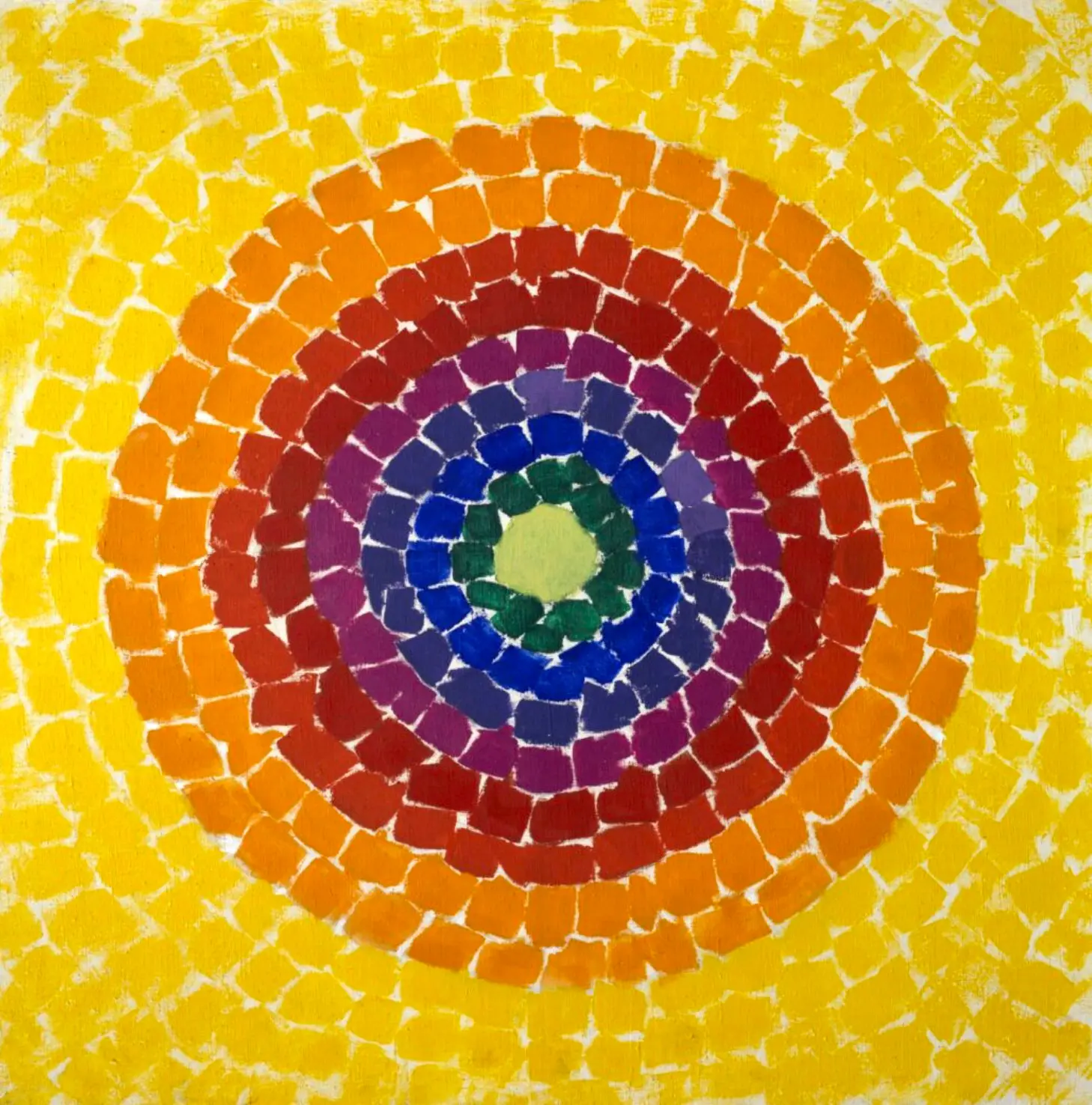
In this blog, we will explore Alma Thomas’ iconic life and colourful artwork to understand why she remains such a prominent figure in contemporary art and how she inspired generations through her bold use of vibrant colour.

Alma Thomas
Alma Thomas’ Early Life and Career
Thomas was born in Columbus, Georgia, the oldest of four girls. In 1907, her family moved to Washington, D.C., seeking relief from the racial violence in the South. Though segregated, the nation’s capital still offered more opportunities for African Americans than most cities in those years.
As a girl, Thomas dreamed of being an architect and building bridges, but there were few women architects a century ago. Instead, she attended Howard University, becoming its first fine arts graduate in 1924. She then began an esteemed 35-year teaching career at Shaw Junior High School. During that time, she earned a master’s degree (1934) from Teachers College of Columbia University.
It was not until the 1950s, when she studied painting at American University with the distinguished artist Jacob Kainen, that she became drawn toward abstraction with an emphasis on colour.
Alma Thomas and Henri Matisse
In 1961, Alma attended a Henri Matisse show of his late-career gouaches at the Museum of Modern Art in New York. After seeing The Snail (1952–53), Alma began exploring the technique of collaging rectangles and squares but instead with paint. She created Watusi (Hard Edge) which is a spin-off from The Snail, rotated 90 degrees.
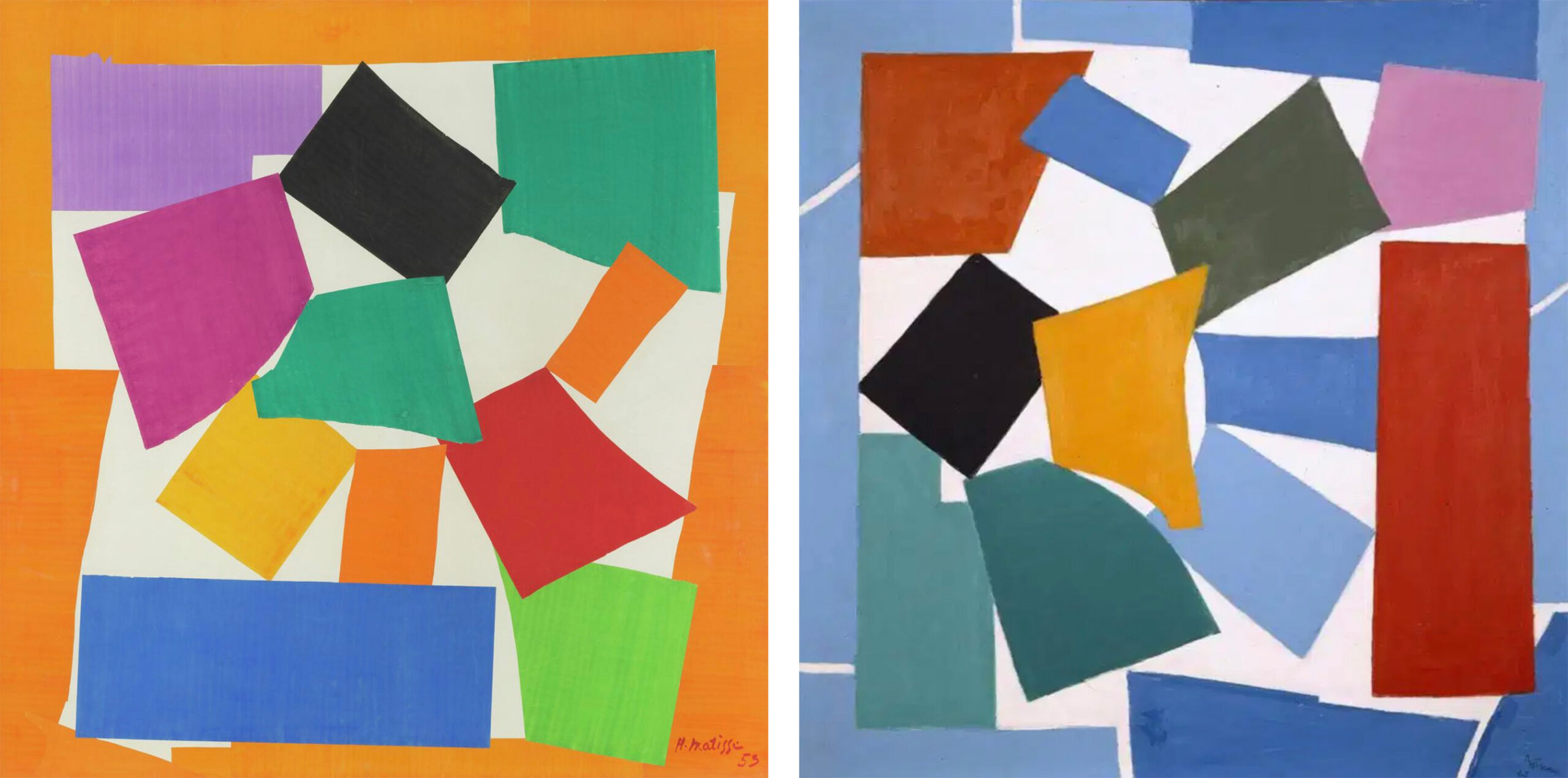
Henri Matisse’s ‘The Snail’ (1952–53) and Alma Thomas’ ‘Watusi (Hard Edge)’ (1963)
Alma Thomas and Abstract Expressionism
After devoting herself full time to painting in 1960, at the age of sixty-nine, Alma Thomas rose to prominence as a Colour Field abstractionist.
She debuted her abstract work in an exhibition at Howard in 1966, at the age of 75. Thomas’ abstractions have been compared with Byzantine mosaics and the Pointillist technique of Georges Seurat.
Her watercolour and oil paintings incorporated the use of (sometimes overlapping) colourful rectangles. She continued to use this technique in her works, which explored colours found in trees, flowers, gardens, and other natural imagery.
Nature was a constant muse for Alma, and she became known for paintings that were based on observing nature in changing light. Alma painted in her living room / studio, inspired by smaller patterns in nature seen when sunlight was moving through her window.
Her painting Evening Glow (1972) was inspired in part by Thomas’s holly tree outside her living room at night.
“I’ve never bothered painting the ugly things in life. People struggling, having difficulty. You meet that when you go out, and then you have to come back and see the same thing hanging on the wall. No. I wanted something beautiful that you could sit down and look at. And then, the paintings change you.” – Alma Thomas (1977-78)
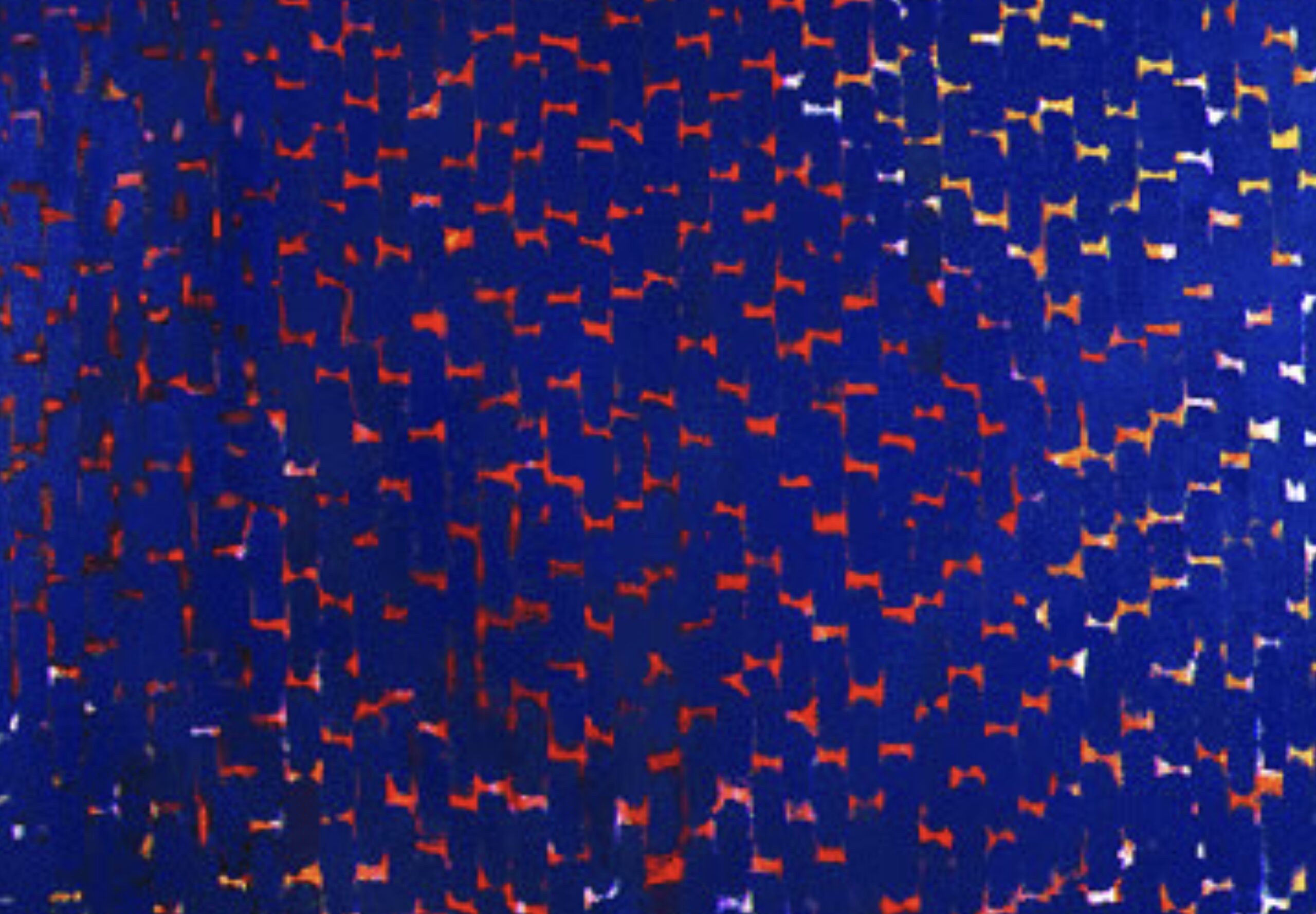
Evening Glow (1972)
The First Black Woman to have a Solo Show at the Whitney Museum
Gaining attention for her art much later in life than most, she became the first African American woman to have a solo exhibition during 1972 at the Whitney Museum in New York City.
In doing this, she shaped the way for future generations of artists, proudly representing woman and people of colour and breaking barriers in the art world through her vibrant, expressive work.
New York critics were impressed with Thomas’s modern style, especially given that she was a nearly 80-year-old woman at the time of her national debut. The New York Times reviewed her exhibit four times, calling her paintings “expert abstractions, tachiste in style, faultless in their handling of color.”
“Creative art is for all time and is therefore independent of time. It is of all ages, of every land, and if by this we mean the creative spirit in man which produces a picture or a statue is common to the whole civilized world, independent of age, race and nationality; the statement may stand unchallenged.” – Alma Thomas (1970)
Featured in the exhibition were artworks ‘The Eclipse’ (1970) and ‘Antares’ (1972)
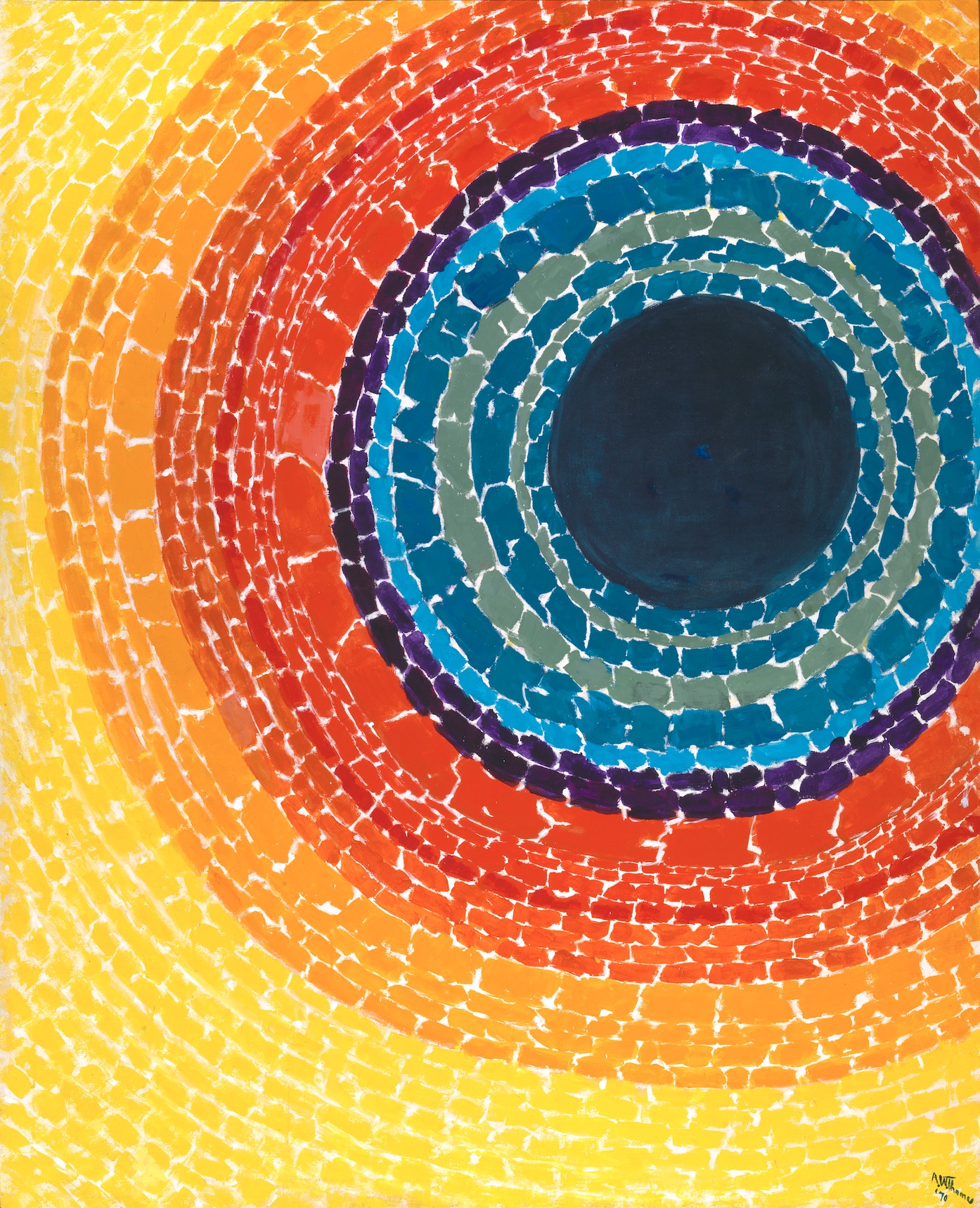
The Eclipse (1970)
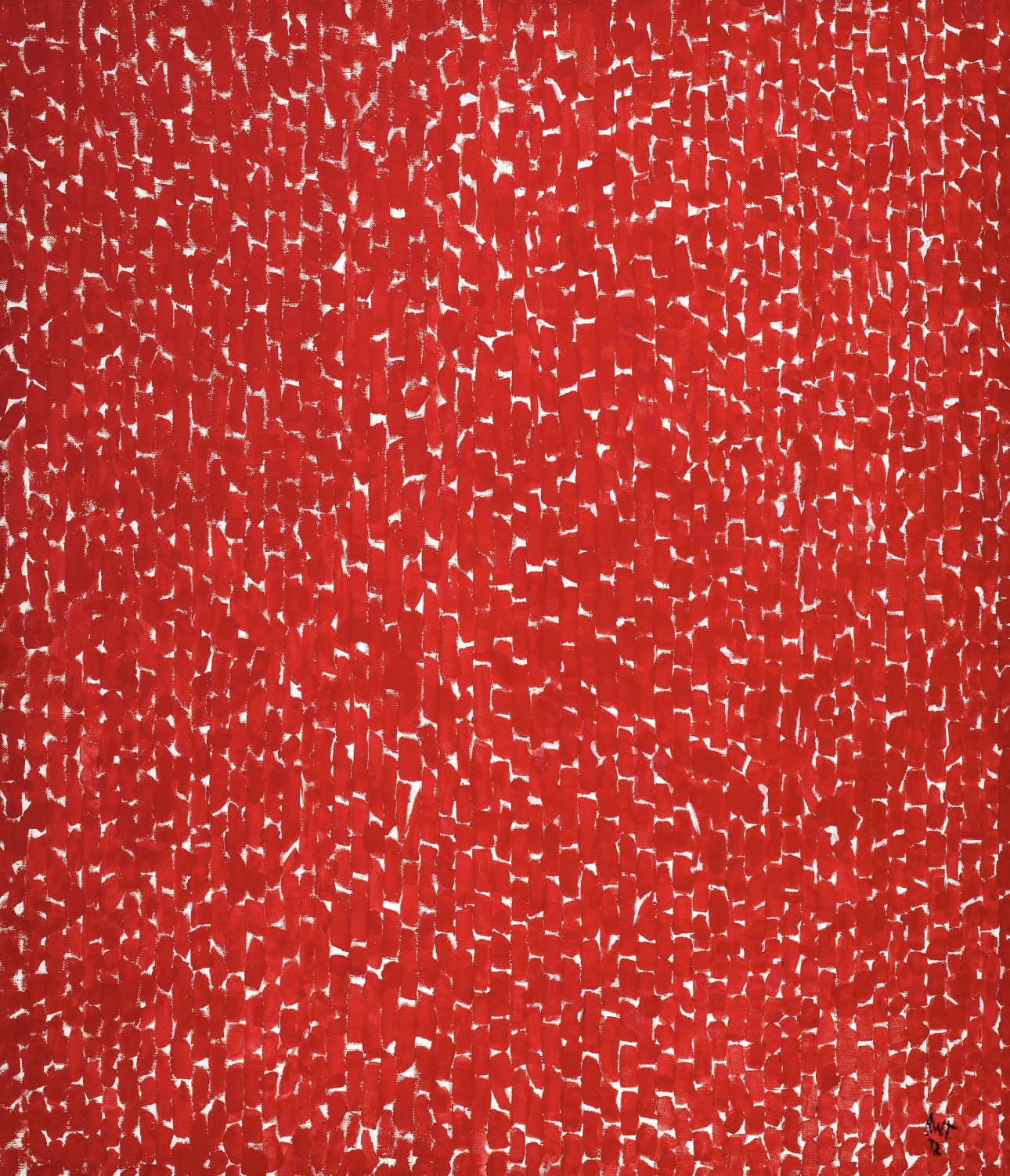
Antares (1972)
Alma Thomas’ work at the White House
In 2015, President Barack Obama placed her painting ‘Resurrection’ (1966) in the old family dining room of the White House.
There are also two paintings from the 1960s by Josef Albers, a rug from 1950 by Anni Albers, and a 1978 Robert Rauschenberg hanging there.

Photo by Pete Souza
Some of Alma Thomas’ Iconic Paintings:
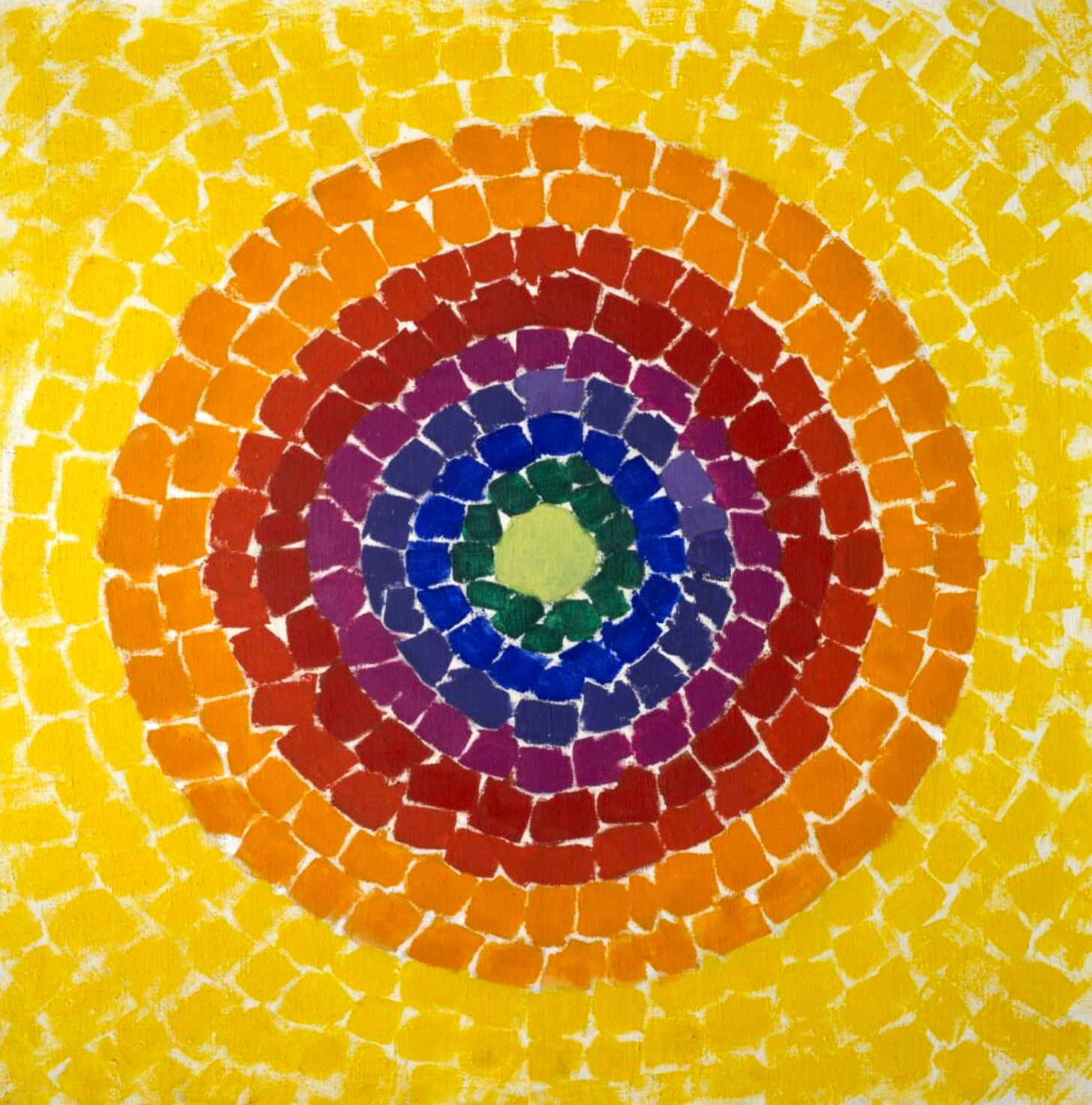
Resurrection (1966)
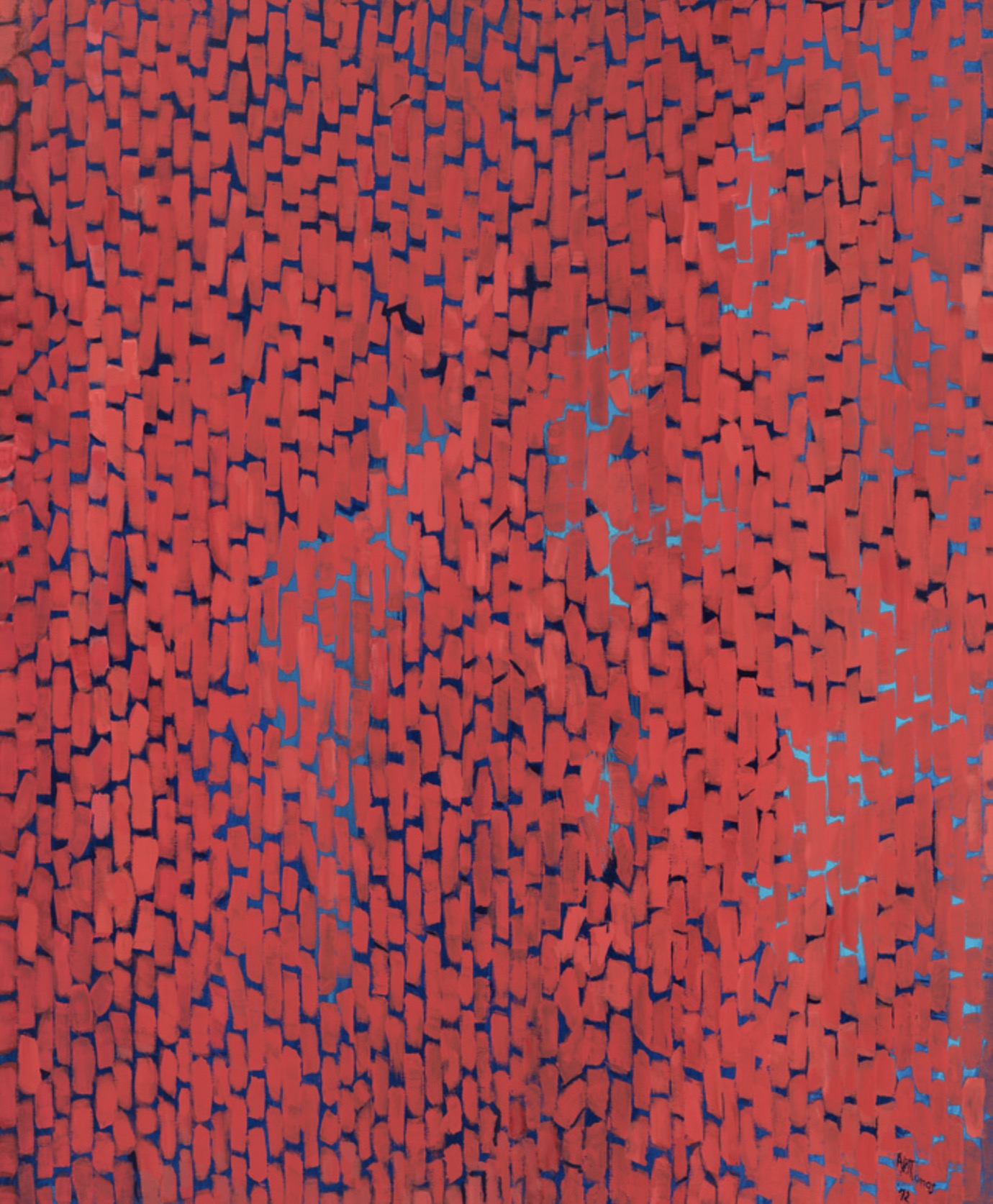
Mars Dust (1972)
She called her paintings ‘Alma’s Stripes,’ as the overlapping shapes of paint created elongated rectangles. Later works were inspired by space exploration and the cosmos. The title of her painting alluded to news stories of a dust storm on Mars.
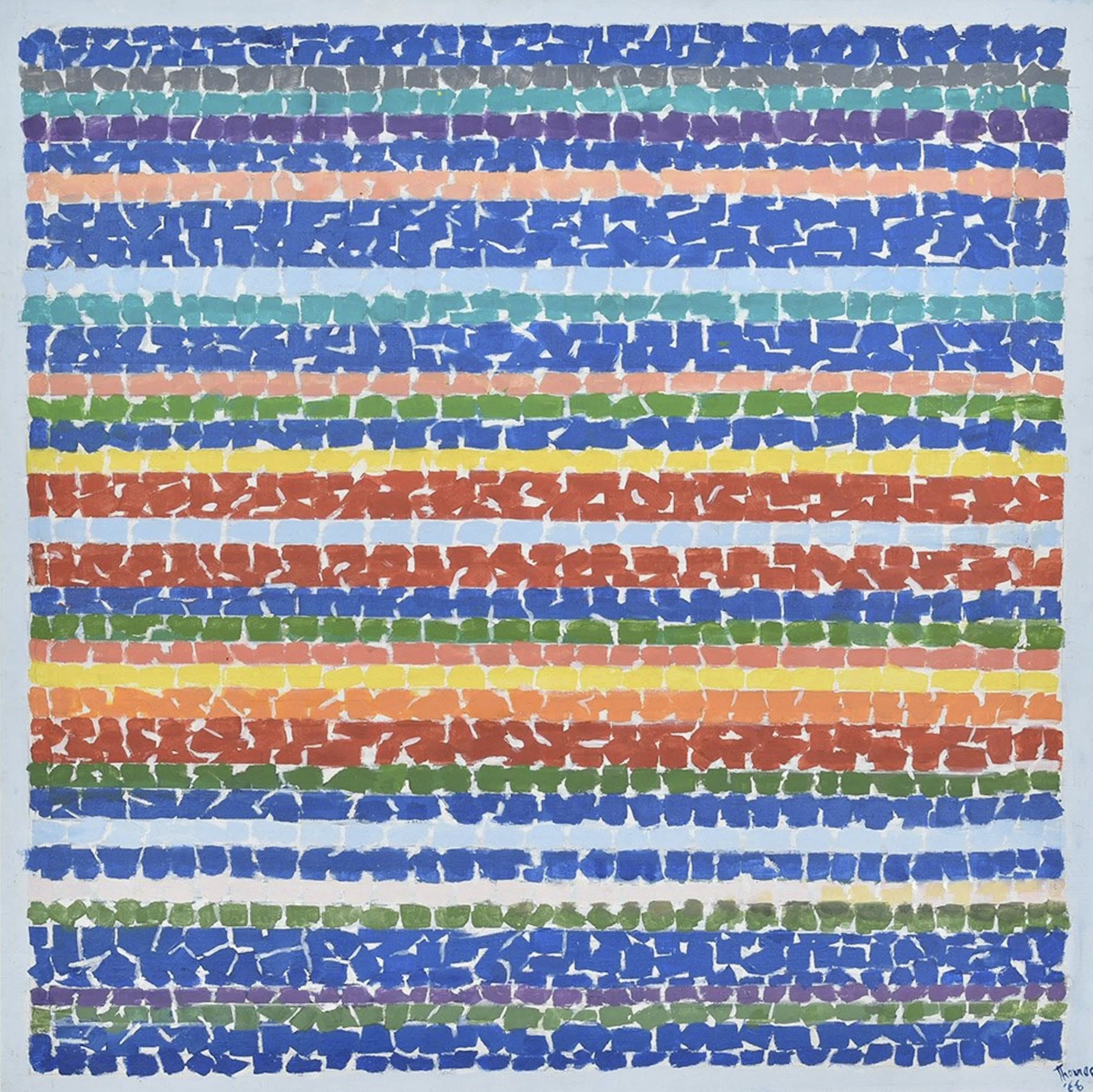
Air View of a Spring Nursery (1966)
Colourful Contemporary Rugs
If you enjoy Alma Thomas’ colourful paintings, take a look at these contemporary rug designs which are like artwork for your floor:
Colour Canyon Rug and Runner
Composed of 85 hand dyed wool colours, the Colour Canyon rug is Sonya Winner’s most ambitions colour mixing project to date.
The wool is pot dyed in small batches by eye, based on the dye master’s colour recipe book. We use Swiss dye pigments, which are extremely high quality and completely free from Azo-based compounds, so are kind to the human skin.
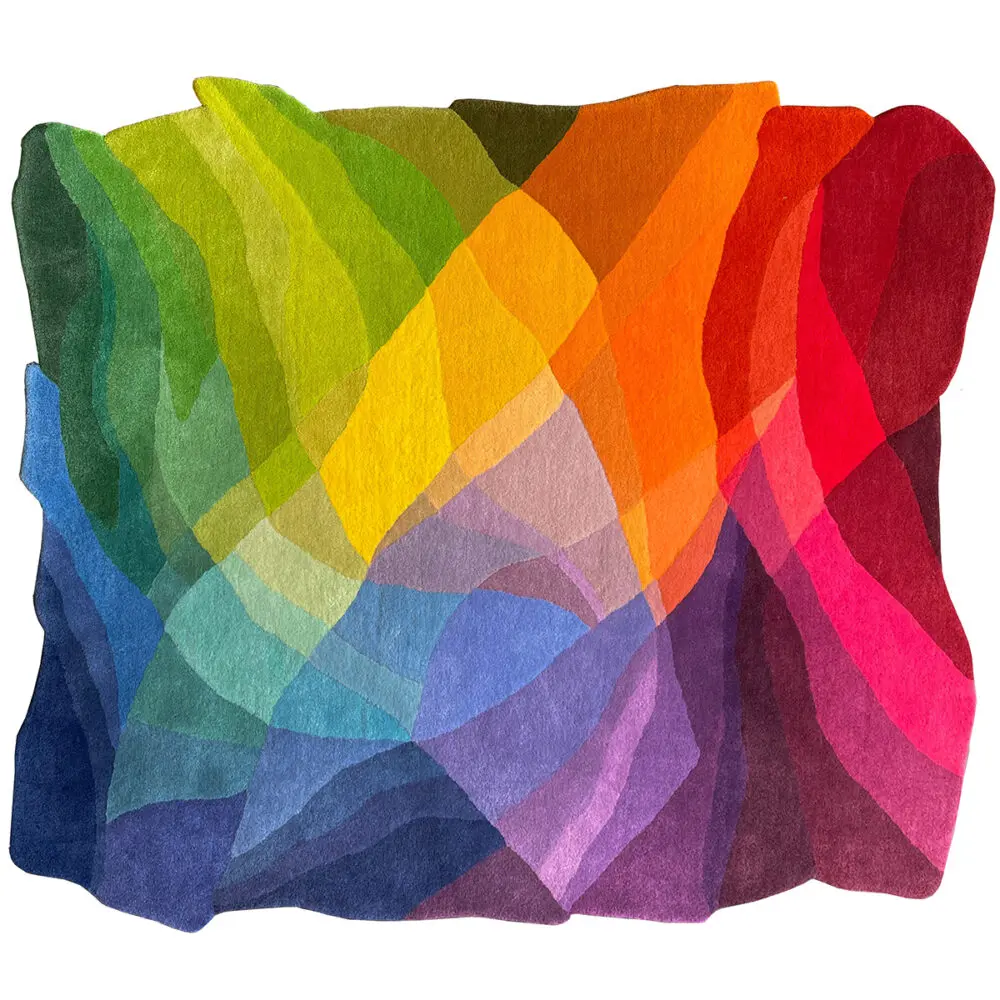
The Colour Canyon Rug by Sonya Winner
This complex art rug celebrates the union of vibrant colour and calming organic shapes. The soft dynamism within the design echoes the way in which the Canyon has been shaped by the elements for millions of years, creating an elegant flow of natural forms.
The Colour Canyon Rug also comes in the form of a Runner, perfect for brightening any hallway, bedside or narrow space.
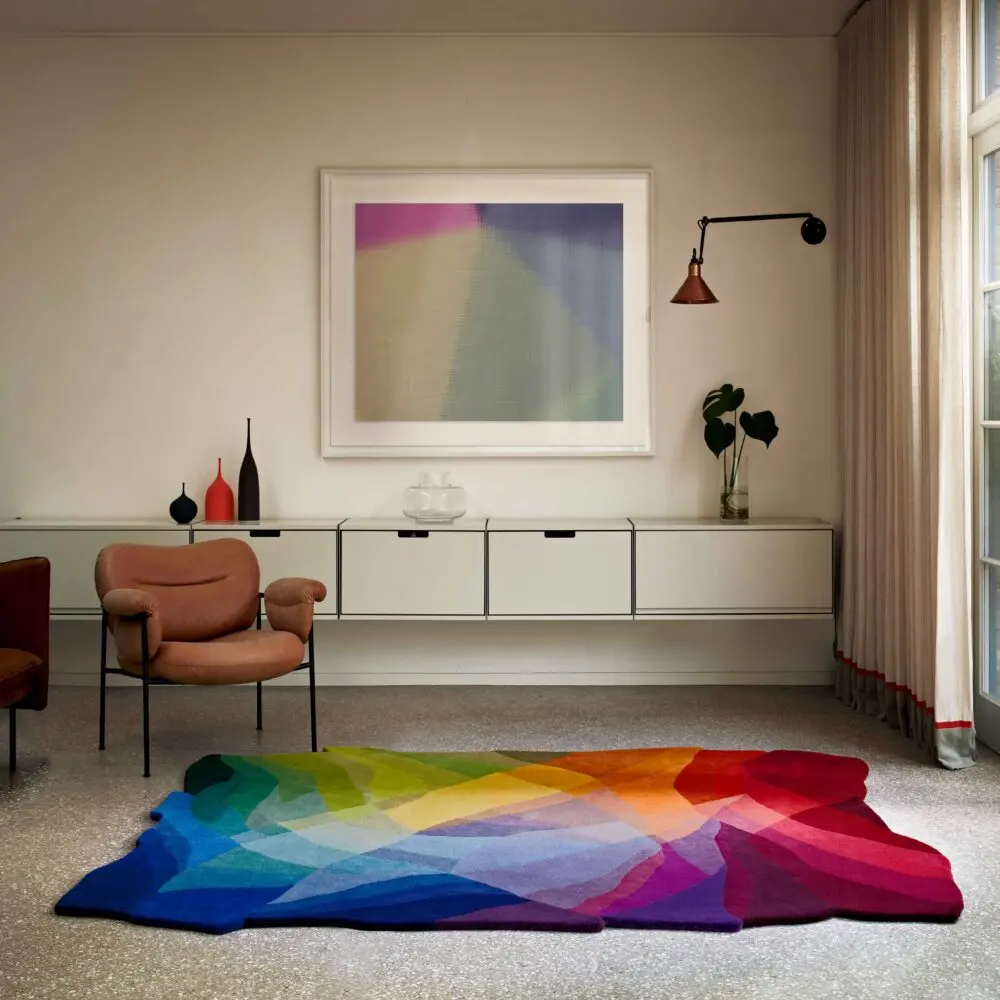
The Colour Canyon Rug by Sonya Winner
After Matisse Rug
Like Alma Thomas, Sonya Winner was also inspired by Herni Matisse when designing her colourful contemporary rugs.
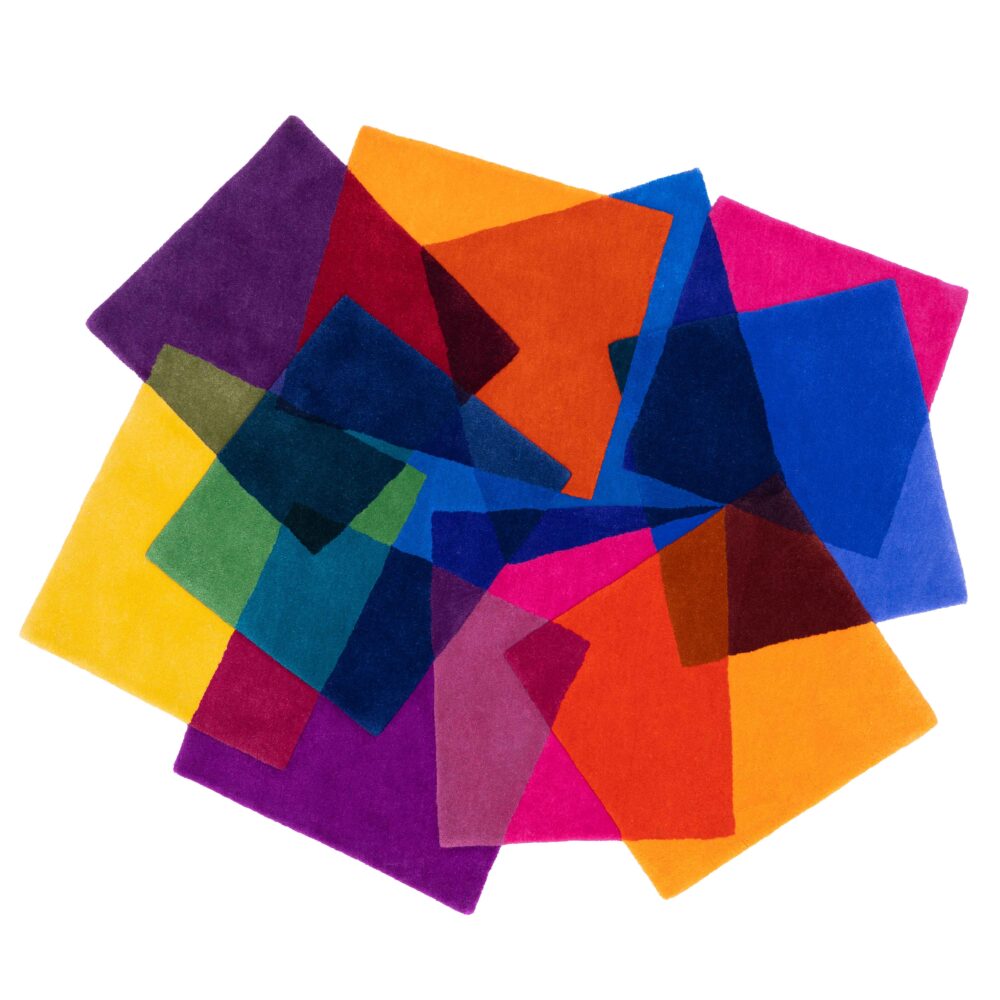
After Matisse by Sonya Winner
Sonya created the After Matisse rug from a collage of overlapping squares of colours. The 25 100% wool colours replicate the effect of transparent colours mixing together.
Handwoven by artisan weavers, this bright and playful area rug has a special sculptural quality, as it has varying pile heights which are carved to resemble a 3D surface.
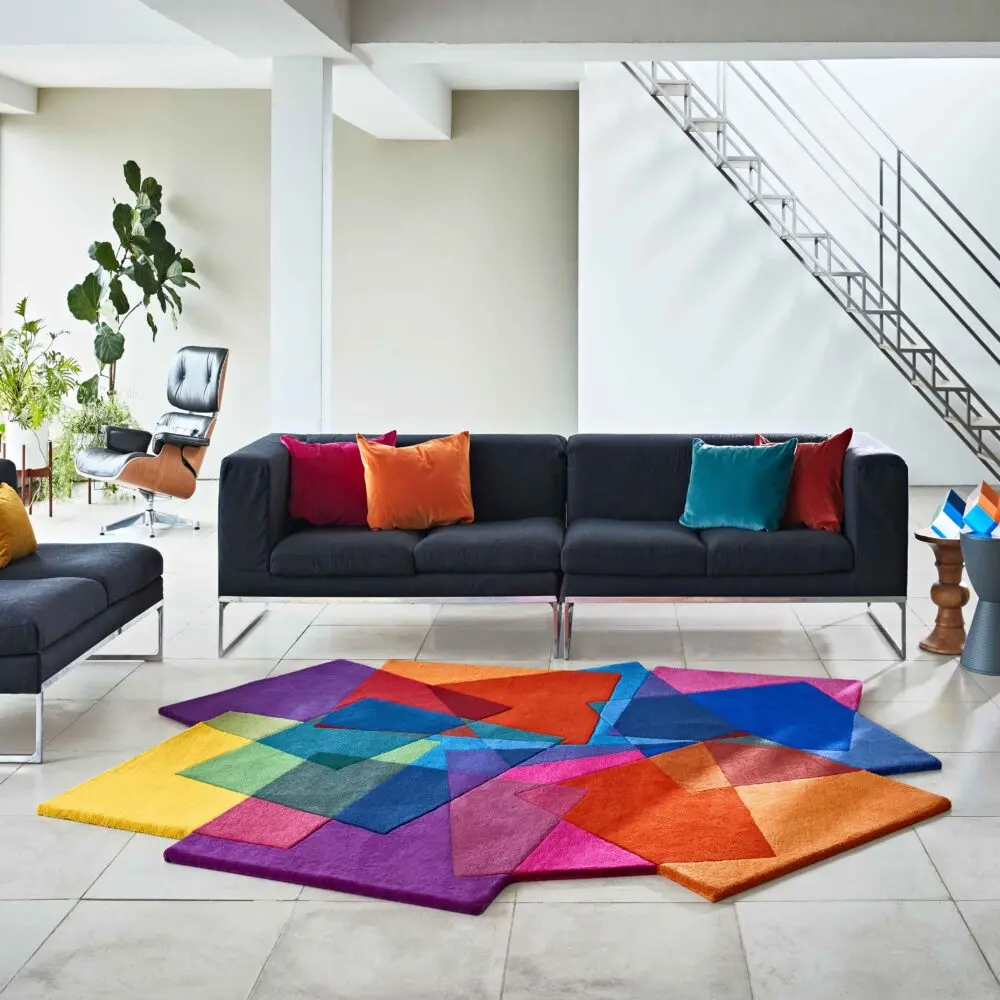
After Matisse Rug by Sonya Winner
Sign up for our newsletter to receive 10% off your first order, as well as receiving monthly emails about art, interior design and exclusive sales.






